Whole-Home Repiping In Upland, CA
When a home's interior supply lines are failing in multiple places, repiping the whole house is often more cost-effective than chasing one leak after another.
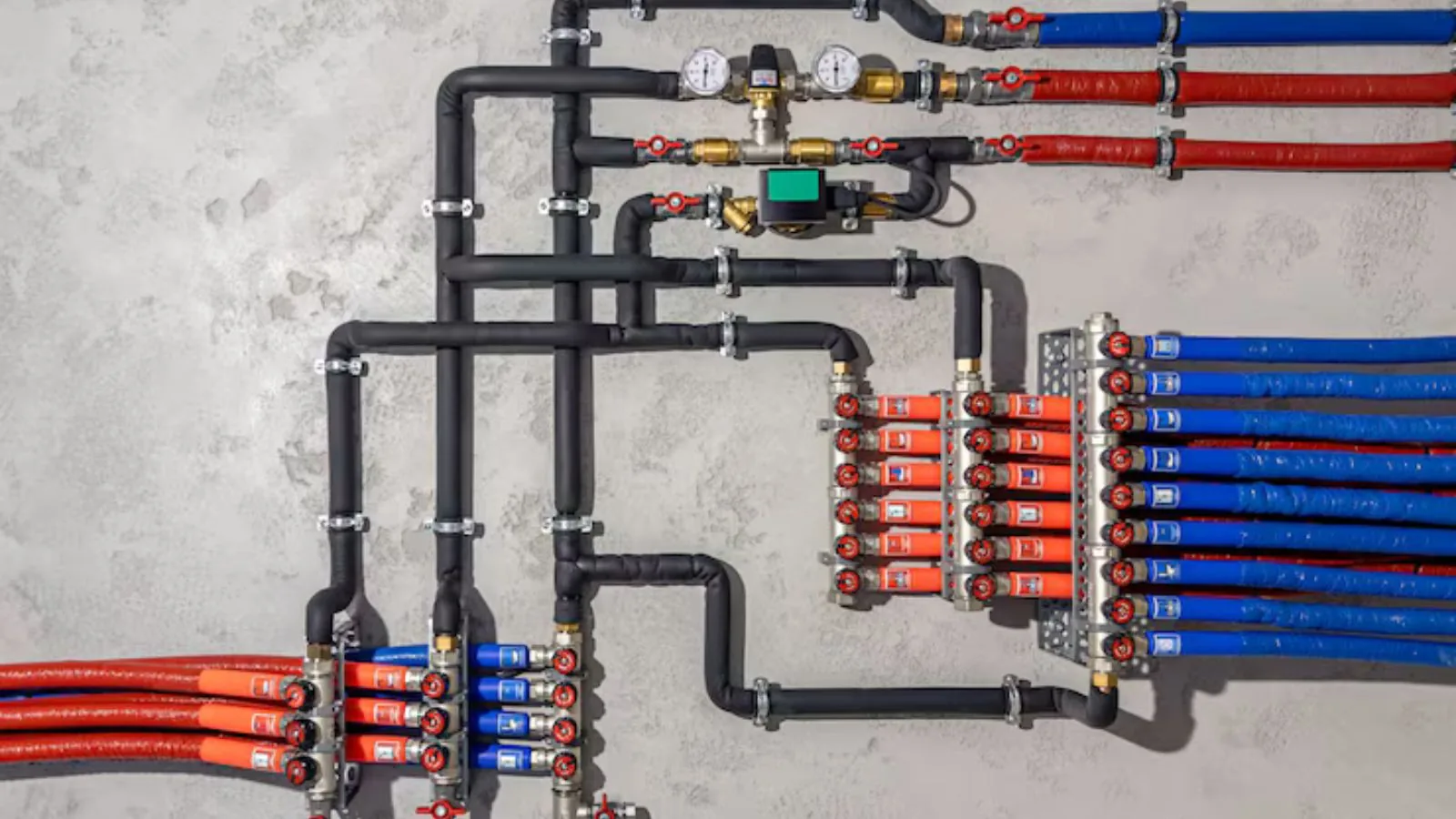
Repiping replaces a home's interior supply lines, not the sewer or the incoming service line from the street. It's the right call when galvanized or polybutylene pipe throughout the house is aging out and producing repeated leaks in different spots rather than one isolated failure.
This is a different job from a single leak repair or the water line from the meter to the house. If you're not sure which situation you're in, we can assess during a leak detection visit before recommending a full repipe.
Why Older Upland Homes Need Repiping
Galvanized steel pipe, common in homes built before the 1960s, corrodes from the inside over decades until the interior diameter narrows and pressure drops, eventually leading to pinhole leaks in multiple spots.
Polybutylene pipe, used in some homes built between the late 1970s and mid-1990s, is prone to breaking down from the inside due to chlorine exposure in municipal water, often without external warning signs until a fitting fails.
Upland's hard water accelerates internal corrosion in galvanized pipe specifically, which is part of why repiping conversations come up earlier here than in a soft-water market.
Signs You Need A Full Repipe
Leaks In Multiple Locations
Different spots failing over months or years points to system-wide pipe age, not a single bad section.
Persistently Low Water Pressure
Often internal corrosion narrowing the pipe diameter throughout the house.
Discolored Water From Multiple Fixtures
A sign of widespread galvanized pipe corrosion, not a single fixture issue.
Home Has Original Polybutylene Pipe
Worth a proactive assessment even without an active leak, given this material's known failure pattern.
Dealing With Repeated Leaks?
A full assessment tells us if repiping makes more sense than chasing individual repairs.
How Repiping Works
Assess
Confirm the pipe material and extent of the issue.
Plan
Map the most efficient routing to minimize wall and ceiling access.
Repipe
Install new copper or PEX lines throughout.
Patch & Test
Pressure test the new system and coordinate drywall patching.
Copper Vs PEX
Copper
- Longer proven track record
- Higher material cost
- Rigid, more joints needed
- Naturally resistant to bacteria
PEX
- Lower material and labor cost
- Flexible, fewer fittings needed
- Faster installation timeline
- Slightly shorter proven lifespan than copper
How We Limit Wall And Ceiling Access
A full repipe doesn't have to mean opening every wall in the house. We plan routing to minimize access points, often running new lines through attics, crawlspaces, or existing chases where possible, and patch any drywall access points as part of the project.
What Repiping & Whole-Home Pipe Replacement Costs In Upland
Exact quote after inspection, before any work begins.
Repiping due to age or material failure is generally considered a maintenance improvement and is not covered by insurance, though damage from an active leak that already occurred may be covered separately.
Common Questions
How long does a whole-home repipe take?
Most residential repipes take two to five days depending on home size and material choice.
Will I have water during the project?
We coordinate scheduling to minimize downtime, though water is typically off during active work each day.
Copper or PEX, which is better?
Both are code-compliant and reliable. Copper has a longer track record. PEX is faster to install and costs less. We can walk through the tradeoffs for your specific home.
Do I need to repipe if I only have one leak?
Not necessarily. A single leak in an otherwise sound system is usually a standard repair, not a full repipe.